Thursday, December 28, 2017

USA news on Youtube Dec 28 2017

As Count Dooku worked to strengthen the separatist alliance, he brought in many powerful factions,

such as the Trade Federation, the Banking Clan, the Techno Union, the Commerce Guild

and the Corporate Alliance.

Having fully embraced the darkside and their ambitious, selfish nature, it was not long

before he already started planning for the future, and the day he would overthrow Sidious

to replacing him as Master of the Sith.

And so when he learned of a powerful force user who had defeated the pirates and warlords

of the planet Rattatak, he offered her a place by his side, to serve as his apprentice.

Asaaj Ventress, as she was known, was born into the nightsister clan of Dathomir, but

was sold into slavery at a young age.

During her time on the planet Rattatak, she was found by a stranded jedi, who trained

her as his Padawan.

Yet soon her master was killed, and this loss affected her so deeply she turned to the darkside

and went on a mission of vengeance.

Asaaj proved a useful tool for Dooku, however Sidious grew concerned about the darkside

assassin and how powerful she was becoming.

Confronting Dooku, the Dark Lord demanded to know if he'd taken on his own apprentice,

in the hopes of replacing Sidious as Master of the Sith.

Though that indeed was Dooku's plan, he was forced to deny it, and was ordered to

kill Ventress to prove his loyalty.

And while Dooku gave the order to have her ship destroyed, his former apprentice survived

the attack and returned to her homeworld of Dathomir, where Mother Talzin and the Nightsisters

healed her wounds.

Working together with the clan, Asaaj then set out on a mission of revenge, but failed

in her first attempt to kill her former master.

Fortunately, Dooku did not learn who was responsible for the attack, and so when Mother Talzin

approached the Sith Lord, offering a new darkside apprentice to replace Ventress, he accepted

her offer.

And so Savage Oppress, a powerful force user and brother of Darth Maul was given over to

the Dooku, though his true loyalty was to the nightsister Asaaj Ventress .

Eventually the deception was revealed, and Dooku was forced to engage both of his former

apprentices.

But they were unable to overcome the Sith Lord and Savage, having grown enraged by the

taunts and dismissal of both his darkside Masters, turned against Ventress as well,

pinning all 3 against each other briefly, until they became separated and escaped.

Ventress later returned to Dathomir, only for Dooku to send a droid army against them,

wiping out the nightsisters and leaving his former apprentice alone in the galaxy, forced

to become a bounty hunter for her remaining years.

Savage however was not yet finished with being a darkside apprentice, as he was sent on another

mission by Mother Talzin before the Nightsisters were destroyed, seeking out his brother Maul

who survived the duel with Obi wan Kenobi through his deep connection to the force.

Although Maul had been greviously wounded and grown mad over the years, he was eventually

found and his mind soothed, then returning to Dathomir where he was given cybernetic

legs.

Maul, now yearning for vengeance and eager to carve a new place for himself in the galaxy,

took his brother Savage as a Sith apprentice, modelling their relationship after the Rule

of Two, and legacy of Darth Bane.

Together the brothers went off, wreaking havoc across the galaxy, forming a shadow council

and even coming to rule the planet of Mandalore.

Yet when Darth Sidious learned of Maul's survival and his formation of a secondary

group of Sith, he came to see his former apprentice as a rival, and so went personally to Mandalore

and engaged the brothers, killing Savage and imprisoning Maul.

Although Maul eventually escaped captivity, he never again rose to the heights he'd

once reached, and over time became obsessed with seeking vengeance against Kenobi, who

had robbed him of the chance to become a great Dark Lord of the Sith.

Yet his obsession only served to stunt his growth and power in the force, where as Master

Kenobi became wiser, more patient and cunning with each passing year.

Decades later, Maul at last tracked down the old Jedi to Tattoine, where they fought a

final dual resulting in Obi wan quickly defeating and killing his old foe.

As the Clone Wars continued, Sidious continued to use his apprentice Count Dooku to sow chaos

and division across the galaxy.

However he also saw great potential in another, believing that the young jedi Anakin Skywalker,

might one day become far more powerful then Dooku, and a more worthy Sith apprentice.

Anakin Skywalker had once been a slave on Tattoine, but was discovered by Kwi Gon Jinn

who after learning that the child had been conceived by the force, came to believe he

the chosen one which prophecy stated who would one day bring balance to the force.

Despite being too old for traditional Jedi training, Anakin was taken as the apprentice

of Obi Wan Kenobi and quickly grew to be a powerful force user and masterful with a lightsaber.

Nevertheless he was proving to be a poor Jedi, unable to control his emotions and suffering

from night terrors in which he envisioned future tragedies and the death of loved ones.

As he grew more powerful and earned the rank of Jedi Knight, he became arrogant in his

skills, resentful towards the council for not making him a Master, and even bitter towards

Obi Wan, for constantly treating him like a Padawan.

Anakin also fell in love with senator Amadala, violating the Jedi Code by marrying her in

secret.

Chancellor Palpantine, who grew close to Anakin from a young age, took every opportunity to

encourage his independent thinking, slowly luring him to the darkside.

Sidious even organized his own kidnapping, in order to manipulate events so that Anakin

and Obi Wan would have to face Count Dooku in battle.

In the past, Dooku had faced and defeated both of these Jedi, only failing to kill them

because of the interference of Master Yoda.

But this time the fight proved more challenging.

Although the Dark Lord defeated Obi Wan, he was unable to overcome Anakin Skywalker and

was beheaded at the order of Palpatine.

With his apprentice dead, the Chancellor offered Anakin a place by his side, and revealed himself

as a Sith Lord.

Anakin at first was shocked by the revelation and reported the discovery to Mace Windu who

along with Jedi Masters Kit Fisto, Agen Kolar and Saesee Tin went off to arrest the Chancellor.

But Sidious was so powerful he was able to kill all the Jedi save mace Windu, who was

able to reflect back his force lightening.

Yet just as Master Windu was about to land the finishing blow, Anakin Skywalker cut off

his arm, allowing for Sidious to send Mace Windu flying out a window to his death.

Anakin had fallen to the darkside, believing that only with the help of Darth Sidious would

he be able to prevent the death of his wife and unborn child.

And so Sidious named his new apprentice Darth Vader and ordered him to kill the last of

the Separatists leadership to bring about an end to the Clone Wars.

For more infomation >> Star Wars: Sith Order - Canon (Part 3 of 5) - Duration: 7:02.

-------------------------------------------

Used Ford E350 Wheelchair Van Perfect for medical transport, nursing homes & senior care - Duration: 2:52.

For more infomation >> Used Ford E350 Wheelchair Van Perfect for medical transport, nursing homes & senior care - Duration: 2:52.

-------------------------------------------

Namorado Americano Reagindo a Vai Malandra - Duration: 5:00.

For more infomation >> Namorado Americano Reagindo a Vai Malandra - Duration: 5:00.

-------------------------------------------

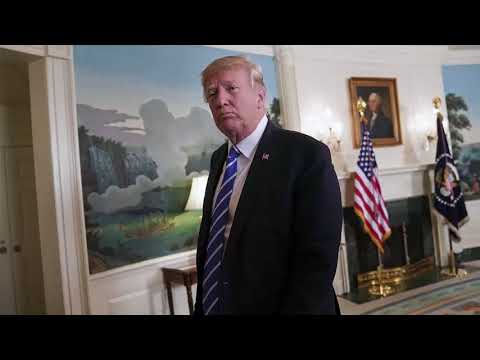
How Trump could kill the Iran nuclear deal in January - Duration: 3:56.

How Trump could kill the Iran nuclear deal in January

The president will soon face a series of deadlines during which he could deliver on a campaign

promise to rip up the 2015 agreement.

President Donald Trump allowed the Iran nuclear deal to survive through 2017, but the new

year will offer him another chance to blow up the agreement � and critics and supporters

alike believe he may take it.

By mid-January, the president will face new legal deadlines to choose whether to slap

U.S. sanctions back on Tehran.

Senior lawmakers and some of Trump's top national security officials are trying to preserve

the agreement.

But the deal's backers fear Trump has grown more willing to reject the counsel of his

foreign policy team, as he did with his recent decision to recognize Jerusalem as Israel�s

capital.

The decision represents an opportunity for Trump to deliver on a campaign promise to

rip up the Iran deal, one he has repeatedly deferred at the urging of senior officials.

When Trump last publicly addressed the status of the Iran agreement, in mid-October, he

indicated his patience had worn thin with what he has called �the worst deal ever,�

and demanded that Congress and European countries take action to address what he considers the

deal�s weakness.

�[I]n the event we are not able to reach a solution working with Congress and our allies,

then the agreement will be terminated,� Trump said in an Oct. 13 speech.

The three months since then have shown little progress toward such a solution.In an effort

to save the deal, members of Congress are discussing legislation that would give Trump

political cover to extend the deal.

But it�s not clear whether Republicans and Democrats can agree on even a symbolic measure

in time.

�It�s entirely possible that Trump tells Congress and the Europeans, �I gave you

90 days to get your act together and you didn't � and I�m done,�� said Mark Dubowitz,

CEO of the Foundation for Defense of Democracies, a hawkish Washington think tank with close

ties to the Trump White House.

The deal was negotiated in 2015 by the Obama administration, along with five other nations.

It lifted U.S. and European sanctions on Iran in exchange for strict limits on Tehran�s

nuclear program.

The deal�s supporters say military action was the only realistic alternative to preventing

Iran from acquiring a nuclear weapon.

Critics say the deal allowed Iran to retain too much nuclear capability and that the sanctions

should have been given more time to bite.

The deadlines for Trump begin on Jan. 11, when the agreement requires him � as it

does every 90 days � to certify whether Tehran is meeting its obligations under the

deal.

International inspectors who visit the country�s nuclear facilities have repeatedly said Iran

is doing so.

But Trump refused to certify Iranian compliance in mid-October, citing in part Iranian aggression

throughout the Middle East.

Trump�s refusal to certify had no immediate practical effect on the deal, though under

the law it triggered a 60-day window for Congress to restore the sanctions by a simple majority,

without the possibility of a Senate filibuster.

While expectations were high for some congressional action that Trump could point to as a response

to his complaints, Congress became consumed by tax reform and took no action.

One hard-line measure that attracted attention this fall, devised by Sen. Tom Cotton (R-Ark.),

went nowhere after Democrats made clear they would strongly oppose it.

Even more consequential are upcoming deadlines for Trump to continue the temporary waiver

of U.S. sanctions on Iran, which the deal dictates will not be permanently repealed

for several more years.

The president must renew the waivers every 120 days.

Sources familiar with the law said multiple waiver deadlines arrive between Jan. 12 and

Jan. 17, forcing Trump to reassess the deal.

For more infomation >> How Trump could kill the Iran nuclear deal in January - Duration: 3:56.

-------------------------------------------

Trump builds his 2018 political message by rebranding Obama's economic legacy - Duration: 3:49.

Trump builds his 2018 political message by rebranding Obama�s economic legacy

After disputing economic gains under his predecessor, the president is seizing the same trends as

his own.The White House hopes to boost President Donald Trump�s low approval ratings by using

the economy as a centerpiece of its political message in 2018, according to three White

House officials, even if many of the president�s successes so far are squarely built on the

legacy of former President Barack Obama.

The trends of declining unemployment, coupled with healthy gains in the stock market, began

during Obama�s first term, a welcome uptick following the global economic downturn Obama

inherited in 2009.

The Trump administration has built on those gains, particularly in recent months.

Business confidence has soared on the expectation of sweeping tax cuts as well as the administration�s

push to roll back regulations on everything from energy to housing to health care to labor

rules.

But hard economic data on growth, job creation and wages look very similar to the last several

years under Obama.

The pace of job growth actually slowed slightly to 174,000 per month in 2017 through November,

compared with 187,000 per month in Obama�s final year.

Even Trump�s stock market performance is similar to or trails Obama�s.

In the first 11 months of Obama�s presidency, the Standard & Poor�s 500 rose 37 percent.

It rose 18 percent under Trump.

The Dow rose 30 percent in Obama�s first 11 months to Trump�s 24 percent.Despite

the underlying similarities to Obama, the White House plans to brand the economy as

Trump�s doing in 2018 and sell a message that the nation is actually performing much

better now, even before any impact from the tax cut bill.

A key piece of the Trump argument will be that economic prospects are even stronger

now after a wave of deregulation across federal agencies in 2017.

"We took a big, big beautiful ship that we�re turning around, and a lot of good things are

happening," the president said Wednesday while meeting with first responders in West Palm

Beach, Florida.

In a series of recent tweets and speeches, Trump has touted the booming stock market,

pace of home sales, high consumer confidence, and the lower unemployment rate in manufacturing

as evidence of a healthy economy over which he now presides.

�The Stock Market is setting record after record and unemployment is at a 17 year low.

So many things accomplished by the Trump Administration, perhaps more than any other President in first

year.

Sadly, will never be reported correctly by the Fake News Media!,� Trump tweeted two

days before Christmas, citing a trend in employment gains that began in 2009 when joblessness

peaked at 10 percent.

The trend has been remarkably consistent for the past eight years.

And just one year ago, Trump called the jobless rate �totally fiction.� In February 2016

he suggested the real unemployment rate was as high as 42 percent.

The White House�s economic argument for the new year � and the midterm elections

� centers on the idea that the real estate developer-turned-president knows how to boost

the economy better than any politician with more traditional government experience.

Leading with an economic argument has an added benefit: appeal to both Trump�s base and

the donor class.

The donors appreciate the goodies associated with tax reform, including the slashing of

business tax rates, reductions in the estate tax and the alternative minimum tax and immediate

expensing for new investments.

For more infomation >> Trump builds his 2018 political message by rebranding Obama's economic legacy - Duration: 3:49.

-------------------------------------------

Who's Winning Trump's War With the Press - Duration: 4:42.

Who�s Winning Trump�s War With the Press

he guy who said, �Never quarrel with a man who buys his ink by the barrel,� didn�t

anticipate Donald Trump.

Since becoming president, Trump has argued the news media to a stalemate thanks to the

power of his alliance with the Fox News Network and his 44 million-follower Twitter account,

which functions as one of the world�s largest printing presses.

And the ink is free.

What makes Trump�s success at media-jamming so remarkable is that it coincides with a

national press that has bird-dogged his every appointment, his every policy decision, his

every political flip-flop, and of course, every ripple in the Russian investigation.

The stronger the press gets, the greater Trump�s powers of deflection become, a spiral destined

to take both to heaven or at the very least to hell.

Trump isn�t the first American president to square off against the press, obviously.

President No. 2, John Adams, sought to silence his press critics with the Alien and Sedition

Acts.

President No. 18, Ulysses S. Grant, bawled in his second inaugural that he had been �the

subject of abuse and slander scarcely ever equaled in political history.� President

No. 37, Richard Nixon, told his consigliere Henry Kissinger that the press was the enemy,

and his White House put some of the day�s best journalists�Mary McGrory, Jack Anderson,

Stanley Karnow, Tom Wicker, et al.�on an �enemies list.�

By defining the press as his prime adversary�not a foreign power or �terrorism� or an energy

crisis, as previous presidents have�Trump has changed the way we view the press and

the way the press views itself.

For Trump, the struggle is Manichean, with him representing good and the press representing

bad.

In a recent tweet, he wrote, �Wow, more than 90% of Fake News Media coverage of me

is negative, with numerous forced retractions of untrue stories.

Hence my use of Social Media, the only way to get the truth out.

Much of Mainstream Meadia [sic] has become a joke!� At an August rally, he said journalists

are �sick people,� �liars� who are fomenting �division.� In statement after

statement, he and advisers like Steve Bannon have cast the national press, not the Democrats,

as �the opposition party.� This trick of classification has paid steady dividends�it

allows him to nullify every critical story as politically motivated and corrupt.

The press has accepted the role of the opposition party if not the designation.

In press conferences and news stories, the national media give Trump the brand of guff

we once heard coming from the firebrand wing of the Democratic Party.

This is not to say reporters are in the tank for the Democrats�only that Trump�s confrontational

style drives them to dig in and return fire.

Trump loves to directly challenge reporters, to appear like the cruel nanny who spanks

children for talking back and thereby goads them into more backtalk.

Trump has arranged the dynamic in such a way that he appears both victim and victor in

every clash.

Trump�s rows with journalists have made him America�s highest-profile press critic,

a kind of malignant, self-interested ombudsman.

Painting from his limited palette, he uses television addresses, interviews and tweets

to depict stories he dislikes as �fakes� or �lies.� The effect has been maddening

for journalists, who have exhausted themselves by writing counter-responses that say, �No!

We�re on the level!��the effect of which is to reinforce the impression among the president�s

most loyal subjects that they are indeed the opposition party.

Being the most mistake-prone president in history hasn�t prevented Trump from capitalizing

on the press corps� recent errors.

First he ripped ABC News� Brian Ross for a botched piece that reported Russian collusion

during the campaign and then he scalped CNN, his favorite whipping boy, for reporter Manu

Raju�s monumental goof about the alleged special access that Donald Trump Jr. had been

given to a WikiLeaks dump�a dump that was already in the public domain.

No press slight has been too minor for Trump to howl about.

When a tweet by the Washington Post�s Dave Weigel incorrectly captioned a photo from

one of Trump�s rallies�only to 'fess up to the error shortly afterward�Trump went

all Old Testament on journalists.

�They are out of control,� Trump tweeted of the press.

�Major lies written, then forced to be withdrawn after they are exposed...a stain on America!�

Trump wants Weigel and Ross fired for their mistakes, and his press secretary has called

for the sacking of ESPN anchor Jemele Hill for calling him a bigot.

For more infomation >> Who's Winning Trump's War With the Press - Duration: 4:42.

-------------------------------------------

How the banks won over Washington again - Duration: 4:14.

How the banks won over Washington again

A decade out from a cataclysmic Wall Street meltdown, banks are winning again in Washington.Less

than a decade after being blamed for fueling the worst financial crisis since the Great

Depression, banks are winning again in Washington.

The rebound for the lenders has been so remarkable that Republicans and Democrats in Congress

are pushing to scale back financial regulations imposed in the wake of the meltdown � one

of the few areas where the two parties agree.

President Donald Trump, who once vowed not to let Wall Street �get away with murder,�

has dropped the demonizing campaign rhetoric and recruited industry veterans to his administration.

His Treasury Department has drawn up a series of recommendations for trimming the post-crisis

rule book.

Even the Federal Reserve, the top banking regulator, is working to relax safeguards.

Lawmakers and regulators are rethinking policies including loosening mortgage protections,

curtailing so-called stress tests that gauge how banks would fare during economic turmoil,

and simplifying capital requirements for smaller lenders.

Many of the proposals are targeted rollbacks rather than a wholesale repeal of regulations,

but they would have a meaningful impact on the industry.

Behind the shift is the intense focus by the Trump administration and GOP lawmakers on

boosting economic growth, a centerpiece of the campaign to enact the massive tax reform

legislation.

Trump said lightening up on the banks will spur lending and allow businesses to grow,

an argument that some analysts question but that the banking lobby has eagerly embraced.

"Banks aren't the winners," American Bankers Association President and CEO Rob Nichols

said of the new dynamic.

"The winners are the economies, clients, communities and American families buoyed by additional

economic growth that can be created through the banking system."

The deregulation drive comes as the U.S. nears the 10-year anniversary of the crisis, when

the federal government committed hundreds of billions of dollars to shore up the financial

system.

Congress then passed the landmark Dodd-Frank law in 2010, the most sweeping rewrite of

financial rules in seven decades.

Sen. Sherrod Brown (D-Ohio), the top Democrat on the Senate Banking Committee, said banking

legislation that's moving through Congress showed there is a "collective amnesia" about

the crisis.

"People are going to look back, whether it's five years, 10 years or 15 years and say,

'This was the beginning of a massive deregulation scheme,'" Brown said.

Bank lobbyists say the government overreached.

"The pendulum swung way too far out of line because of the crisis,� Independent Community

Bankers of America President and CEO Cam Fine said.

"The agencies became much too harsh and much too closed to banker concerns, and I think

you�re going to see the pendulum swing back.� Republican and Democratic lawmakers are echoing

the sentiment that the post-crisis rules need to reflect today�s risks.

Senators from both parties have joined forces to deliver a bill that would streamline mortgage

and capital rules for small banks while also relaxing regulatory oversight of several large,

regional lenders.

The Senate Banking Committee approved the legislation earlier this month, and it probably

has enough support to become law next year.

One of the bill's co-sponsors, Sen. Jon Tester (D-Mont.), said he wasn't surprised that so

many Democrats were signing on to the legislation, viewing it as a way to boost smaller banks.

"They see what's going on in their communities and understand that Wall Street was the reason

we passed Dodd-Frank and it bled down to community banks� and regional banks, he said.

Tester is among several moderate Democrats pressing ahead with the bill despite warnings

from Brown and others in their party that the rollbacks could endanger consumers.

At least 11 Senate Democrats are backing the bill, ensuring that it will not be obstructed

by a filibuster.

�It's past time," said Tester, one of a number of Democrats up for reelection in red

states next November.

"It's too bad we didn't get this done four or five years ago.

But everything has its moment in time.�

No comments:

Post a Comment