Tuesday, November 14, 2017

USA news on Youtube Nov 14 2017

Let's have some breakfast!

Hey everyone! I'm Dana and you're watching Wanted Adventure Living Abroad.

During the week breakfast is pretty much something that I eat because I have to, but on the weekend

it is a meal of the day that I truly enjoy in both Germany and the U.S., but the weekend breakfasts

in these two countries are quite different.

In both countries, nowadays weekday breakfasts are often pretty quick events.

Maybe some muesli or a roll and cheese in Germany or something picked up from a bakery

on the go.

In the U.S. maybe some cereal, a bagel, or a breakfast burrito, for example, picked up

to eat on the go.

But on the weekend in Germany a typical breakfast might look something like this:

So here on the table for our "typical" German breakfast, we have some rolls and slices of bread.

And then you've got to have some stuff to put on those rolls and bread.

We've got, ah, cream cheese.

I almost said the German "fresh cheese" -- Frischkäse.

Cream cheese. Two different kinds of cheese. Butter. Some strawberry jam.

And some jam that our friend made us, actually.

And we've also got Nutella back there. - Milk. - Milk because Stefan said

that you've got to have milk sitting on the table at a German breakfast.

And, oh! We have hard-boiled eggs. - Hard-boiled eggs. - Yeah.

And we're drinking orange juice. - Orange juice. - Cheers. - And mine has ice in it because

I'm still an American even at a German breakfast. - Yeah. And I'm drinking green tea

out of my lovely mug. - And...- Do you remember? - Yeah.

The video is probably somewhere here or in the description.

I got him the mug last year for Christmas.

So let's dig in, right?

Whereas in the U.S. a typical weekend breakfast might look a little something like this:

So what do we have here? - Yeah.

So here...can you see me?

We've got pancakes with maple syrup, and bacon, and a fried egg.

Besides having different foods, a big difference between breakfast in the U.S. and breakfast

in Germany is that, as I showed, in Germany there's often a lot of different options

on the table, and each person can sort of put together their own meal on their plate.

The German breakfast is kind of like a mini buffet spread.

Whereas in the U.S. there's often one set meal that people have agreed upon to have

for breakfast.

It's often put together in the kitchen and then brought to the table to eat like that,

and everyone has the same set of things on their plate.

Another breakfast difference is that in the U.S. once you finish what's on your plate,

you might go back for seconds, but then after that breakfast is pretty much over and it's

time to get on with the day.

Whereas in Germany breakfast can last for a long time.

Even after you've finished doing most of your breakfast eating in Germany, it's often

the case that everyone stays at the table for a while, chatting and sort of still picking

at the food.

You might go thirty minutes without eating anything, and then decide to have another

piece of bread and butter.

So yeah, breakfast is often not over for a while in Germany.

And then also in both countries, what I showed is, of course, not the only kind of "typical"

breakfast that exists there.

As for Germany I know, for example, of the Weisswurst breakfast here in Bavaria, which

is Weisswurst sausages, often served with wheat beer and pretzels.

And in the U.S. there are lots of different breakfast meals that I know and love.

Including: pancakes, like what we had, but also waffles and French toast.

In the South you've got biscuits and gravy and grits, which I also talked about in this

video here.

So my question for you is: how do you do breakfast where you live, and what's your favorite

thing to have for breakfast on a weekday and on the weekend?

Please let me know in the comments below.

Thanks so much for watching.

I really hope that you enjoyed this video.

If you enjoy these videos, please don't forget to subscribe to the channel and hit that like button.

And also a really, really, really big thank you so much to our patrons on Patreon, who

help make these videos possible.

Thank you so much for your support.

If you would like to check out our Patreon page, you can find a link to that down in

the description box below.

Until next time, auf Wiedersehen!

Brötchen, not Semmeln. Brötchen. - Okay. - I'm from Cologne. Is there an actual difference?

Or is it just the, the word?

I think there are, how they are made, how they are cut. - Okay.

Yeah, leave us in the comments below:

how many different words of rolls there are in German. - Okay.

I know Stullen, Brötchen and Semmeln.

Isn't there something like in Berlin Krippe? Krippe? - Probably. Leave us in the comments below. - Yeah.

Schrippe! Schrippe! That's it. Not with a K. Schrippe is in Berlin. I think.

So here at the table...at the table? On the table. Prepositions!

Hungry. - Hungry!

Maybe some muesli or a roll in cheese....a roll in cheese.

But the weekend breakfast in both of these two...what?
For more infomation >> BREAKFAST: Differences in Germany & USA - Duration: 6:08.

-------------------------------------------

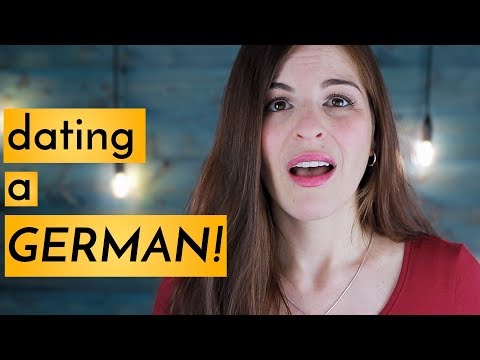
What I Wish I Knew Before DATING A GERMAN - Duration: 7:39.

If only I had known!

Hey everyone, Dana here!

Mr. German Man and I have been together for almost 9 years now, so we have had plenty

of time to get to know each other and figure things out.

But looking back on it, there were definitely a few things that I feel like it just would

have just been nice to know about the German culture and kind of Germans in general before

we started dating.

Now, of course everyone is different and unique, but these are just some things that looking

back on it I feel like...it would have been helpful for me and Mr. German Man to know. Yeah.

First of all, oh how much I wish I had known that Germans can often be quite direct.

As an American, I am used to beating around the bush about things, softening the blow

before giving a critique.

I was honestly taught in school that before giving someone a critique of their work you

should find at least one or two positive bits of feedback to give first.

So for example if I was supposed to critique someone's book report in school, first I

should say "well, I really liked how much effort you put into the plot description,

and the picture on the front of your report that you drew is really beautiful.

But one critique would be...I don't know, maybe, you completely forgot to mention the

main character of the book." Or something. It doesn't matter.

The point is that I was really taught to first write down, you know, and say a few positive

things and then I could give my critique.

Yeah, apparently they did not teach that technique at Mr. German Man's school.

He can often be quite direct and to the point.

For example, maybe I show him a video that I made and he'll watch it and then, you know,

afterwards I'm waiting for his response.

And sometimes if he notices that something

is off about the video he'll just say that thing first, you know?

He'll just be like: the color's off.

Without buffering that with one or two good comments, like what I learned in school.

Or maybe he will say, like: Nice. The color's off.

And that nice at the beginning is his way of trying to be less direct.

Like, buff the critique, he'll be like, nice.

But, yeah, that's still different than what I learned in school.

So I wish I had just known about this whole being more direct thing from the beginning

because then I would have understood it more.

I also wish that I had known that generally speaking many Germans just don't seem to

show their excitement as boldly as, again generally speaking, many Americans do.

If Mr. German Man comes home with exciting news and he tells me about it, I will probably

make a big face to show my emotion very clearly, as though I'm on stage performing in a play.

And I'll oooh and I'll aaahh all dramatically to convey my excitement.

Whereas if I come home and tell Mr. German Man equally exciting news, he'll probably

just be like: oh wow, that's great.

After a while of thinking that maybe he's just not so excited, I finally figured out

he is excited, he just doesn't show it in the same way as me. And that's okay!

I just feel like it would have been helpful to know at the beginning.

Also, going along with this, I wish that I had known that when a German says something

is good, that basically often means the same as when an American says something is great.

So Americans often scale up their adjectives.

For example, if I eat some tasty ice cream, it's amazing.

For Mr. German Man it's nice.

And at first I thought that he was just kind of hard to impress or maybe apathetic about things,

but, yeah, then I finally learned that he also thinks the ice cream is delicious, the

same delicious as me.

But he often reserves words like amazing for things that are, well, a little more impressive.

Whereas I would just add more facial expressions and a few verys to the beginning.

So for me a tasty ice cream is amazing.

But the best ice cream ever is: Oh my God, this is the best ice cream ever!

It's super, super, super amazing.

I just keep getting bigger with my adjectives.

And lastly, I also would have loved to know that Germany, as a whole, is pretty into insurance.

Then I would have much better understood why my German boyfriend seemed so excited about

insurance and so interested in talking about insurance.

Like for me insurance is a necessary thing in life, but it's definitely not something

that I am excited about or I want to talk about.

Insurance is something that I get done with as quickly as possible and that I talk about

in my life for as short a time span as possible.

But this does not seem to be the case for Mr. German Man, and, apparently, also not

the case for some other Germans because I have watched Mr. German Man and his friends

have entire Friday evening conversations about insurance.

The only kinda fun part of the evening was getting to watch all their minds simultaneously

explode when I told them that none of the insurances that they were talking about and

comparing and contrasting even existed in the U.S. Or if they did, nobody that I knew had

ever purchased one of them.

They were just like: What?

They don't exist in America? But...but...but...

So my question for you is: What is your take on these things?

And what's been your experience with this in your own life?

Please let me know in the comments below. Thanks so much for watching.

I really hope that you enjoyed this video.

If you enjoy these videos, please don't forget to subscribe to the channel and hit that like button.

And also a really, really, really big thank you so much to our patrons on Patreon, who

help make these videos possible. Thank you so much for your support.

If you would like to check out our Patreon page, you can find a link to that down in

the description box below.

Until next time, auf Wiedersehen!

We mean the same thing.

But he starts at okay, whereas I start at great.

So by the time he gets to good, I'm at wonderful.

And when he gets to great, I'm at amazing.

When he's at amazing, I'm at super duper amazing.

If in school I was supposed to critique someone's book reporrrt...port...book report.

So here they are.

Some of the things that I wish I had known about Germans before I started...Mr. German Man.

For more infomation >> What I Wish I Knew Before DATING A GERMAN - Duration: 7:39.

-------------------------------------------

How My CLOTHES HAVE CHANGED in Germany! - Duration: 7:53.

How in the world did I make it through college without leggings?

Hey everyone! I'm Dana and you're watching Wanted Adventure Living Abroad.

The clothing that I wear has changed, I would say, in some ways quite dramatically since

moving to Germany, but one of the big reasons for that change is because I lived in South

Florida in the U.S., so I wore a lot of T-shirts, tank-tops, tube-tops, and T-shirt, tank-top

and tube-top dresses there, and here in Germany, I wear a lot of long-sleeve shirts, sweaters,

and the biggest, warmest jackets available.

But there are other ways that my style has changed that don't have so much to do with

the temperature difference or even the fact that clothing style has changed over the past

9 years.

But rather these changes have a lot to do with the influence that living in Germany

has had on my style.

For one, as I mentioned in the video on useless things that I brought to Europe and basically

never needed, in the U.S. I used to wear high heels quite often.

If I was going out for the evening, going to a nice restaurant, celebrating something,

there's a good chance that I was probably going to wear a pair of heels.

I moved to Europe, brought some of the heels with me, and wore them a grand total of

not very many times.

In the U.S. I basically drove everywhere, but now here in Germany I'm walking or trying

to balance on the U-bahn, not tip over, there are cobblestone streets, which I have enough

problems trying to walk on with flat shoes.

So yeah, I pretty much don't wear heels anymore just about ever and my feet definitely

thank me for it.

And in the U.S. if I wasn't wearing heels, I was probably wearing running shoes like

this, or maybe some nicer flats, a little bit fancier flats like this, whereas now I

love, love, love, love, love shoes like this.

These little low-top casual sneaker shoes.

I love them so much!

The kinds of pants that I wear has also changed.

In the U.S. pants that get a little wider at the bottom are pretty common.

I know that I haven't lived in the U.S. for around 9 years, but the last time I was

back I made a point to look at people's pants, and while, yes, I did notice more skinny

pants than when I left the country 9 years ago, I still saw a lot of people in the U.S.

wearing pants that got slightly wider at the bottom.

Not just jeans but also dress pants.

So yeah, in the U.S. all of my pants were like that.

They came out wider at the bottom.

Whereas in Europe, now, I almost exclusively wear skinny jeans and skinny pants.

They all come in tight at the bottom.

And I also started wearing pants of different colors.

I don't know if this fad swept through the USA too, whenever I went back to the U.S.,

I never noticed anyone wearing colorful pants, and when I lived there I certainly didn't

notice anyone wearing red pants or green pants, but in Germany they were.

Also guys. So everyone.

Everyone was wearing colorful pants, and so I took that on as well, and I started wearing

red pants and green pants and blue pants, and all different colors of pants.

Another big way that my fashion has changed, and yeah, this one does have to do with the

weather, but it's such a huge part of my look now so I want to mention it anyway:

wearing scarves.

When I bought my plane ticket to move to Europe 9 years ago, I owned one, single scarf.

And after my goodbye party in Florida, I owned three scarves because one of my friends gave

me these two scarves as a going away present.

So then I owned three. I moved to Europe with three scarves.

And now I have so, so many scarves. This is just a tiny look at my scarves.

I have so many scarves that I have trouble figuring out how to organize them all.

So if anyone has a clever way of organizing their scarves please let me know in the comments.

That would be much appreciated by me and Mr. German Man.

We don't know what to do with all my scarves. Thank you.

And also, the funny thing about scarves is that I've made a few videos wearing one

and then I've seen people commenting in the comments about how they love how I tied

the scarf, and I'm honestly so flattered, because when I first moved to Germany, I remember

Mr. German Man had to help me tie my scarves, because I always made it look like I mess,

I had no idea what I was doing.

I could just wrap them around my neck million times, and that was it.

That was my only move. Just keep wrapping.

And over time I just kind of found my own way of tying them, but it definitely was not

something that came naturally to me.

Another addition to my clothing lineup that did not exist in my wardrobe in Florida: leggings.

Now I love leggings. I wear them so, so, so, so much. In Florida my go-to was jeans.

But now it is definitely leggings.

I wear them all the time, and I don't know how I ever lived without them.

They would have been great in college. Leggings.

And lastly, the kind of bras that I wear has changed as well.

In the U.S., or at least in South Florida, I grew up feeling like everything in the world

around me -- TV, ads, billboards, and so much more, it was always telling me, it was screaming

in my face: bigger boobs are better.

And so in Florida I wore a lot of push-up bras, and they gave me that look that I wanted,

or the look that I felt like I was being told I needed to have, but they were so, so uncomfortable.

And not right away, but after living in Germany for a little while, I grew to feel more comfortable

about not wearing push-up bras.

The whole "your boobs have to be as big as possible" sentiment didn't seem to be pushed

in my face so much from all angles here in Germany.

At least to me, it felt like in Germany it was more like, you are who you are.

Big boobs, small boobs, whatever; you are who you are and that's okay.

At least that's the feeling that I've gotten here in Germany.

So my question for you is: How have your clothes changed over the years, and have you ever

experienced a change in wardrobe after moving to a new place?

Please let me know in the comments below!

Thanks so much for watching.

I really hope that you enjoyed this video.

If you enjoy these videos, please don't forget to subscribe to the channel and hit that like button.

Thank you!

And also a really, really, really big thank you so much to our patrons on Patreon, who

help make these videos possible.

Thank you so much for your support.

If you would like to check out our Patreon page, you can find a link to that down in

the description box below.

Until next time, auf Wiedersehen!

So in Florida I wore a lot of...

And these don't really even technically count as two I think.

Because you have to put them together to get any warmth out of them.

How did I make it through...

No comments:

Post a Comment