-------------------------------------------
Mark Feuerstein Talks His New TV Comedy Series '9JKL' Inspired By His Real-Life | Megyn Kelly TODAY - Duration: 4:12. For more infomation >> Mark Feuerstein Talks His New TV Comedy Series '9JKL' Inspired By His Real-Life | Megyn Kelly TODAY - Duration: 4:12.
 -------------------------------------------
Artificial Restrictions: Stay Focused with Doug McKinlay - Duration: 4:05.
Hi, I'm Doug McKinlay and you're watching
AdoramaTV. Now for the past few episodes
I've been banging on about photographic
exercises. Why you might ask? Well I think
they're a valid way to keep your skills
honed and they're interesting too.
Even after all these years is working as
a pro I still do them for me, they keep
the edge sharp, and you can find some new
things to shoot. Now one of the problems
of being a pro, is you often forget what
you started working as a photographer for
in the first place. Sometimes the business
just gets in the way.
So for today, we're going to look at a
different set of exercises to help
people think outside the box a little.
We're going to call this exercise
'Artificial Restrictions'. Now this could
be anything you choose it to be, as long
as the application limits you in terms
of technique, time of day, equipment and
location. It's a little bit like fighting
with one arm tied behind your back.
You get more proficient with the other
arm the more you practice. As I said the
limitations can be anything, as long as
they have a photographic purpose. It
could be shooting everything in black
and white. Over or under exposing using
one lens. Shooting only in manual,
shooting while seated, or standing on a
bench or a wall. Shooting things only
above you et cetera... you get the picture!
For our purposes today though, I'm going
to pick three limitations. In a previous
video we did one where we use just a 50
mm f/1.4 lens.
Well sticking with that theme today, our
first limitation is using a 24 mm
f/1.4 lens. Now I absolutely
love this lens, and I use it all the time.
It's great for travel, great for reportage,
it's great for landscape, for
cityscape. Now the great thing about
the 24mm lens is it forces
a photographer to think about the
wide-angle. Things like distortion, how I
can use it to my advantage, or get rid of
it. It's a really great lens to practice
with. So our second limitation is time of
day shooting between 10:00 a.m. and 11:00 a.m.
Now at the moment it's 10:00
a.m. and we're in the northern
hemisphere in the summer. So what does
that tell me?
It tells me the Sun is gonna rise quite
quickly. High in the sky and create some
hard contrasty light. Very difficult to
work with.
Not impossible. So I'm not thinking of
people pictures so much, because it'd be
very difficult to get nice face head-on
shots of people, portrait shots without
any kind of artificial light, because
you're going to pick up some shadows under
the eyes under the nose and under the
chin. For architecture it's
actually quite good, because we're going to
use this shadow to our advantage, and
think in black and white. Now the reason
why this exercise is quite good, is
because you don't always have a choice
when you're in a place for the great
light, you might turn it to a place, a
city, wherever, and in the middle of the
day and you have no choice but to work
with the light you've got. Now for me as a
professional. I can't walk away from a
place without the images, so I need to
work with the light I've got. So it's a
very good exercise to learn to work with
hard light. So for the third and final
installment of our artificial
restrictions video. We're going to be seated.
This is a great limitation, but it's a
fantastic limitation, I do it practically
on every job I've ever done.
I'll find a park bench, or city bench and
just sit and wait for the shots to come
in. I often can blend in with the people
around me, they'll soon forget you're
there and you become practically
invisible.
Now you've, it's incumbent on the
photographer on a good perch where ever
you are going to try this. We can get those
great passing pictures. Don't worry about
the equipment you're going to use. I often
use a longer lens, so I can get some
great portrait pictures. It's a great
exercise as I said earlier. The
limitations are not limited, the point is
is to pick things will make you think
about the whole process from conception
to print. Now these exercises I
think are fantastic tools and everyone
should do them from time to time.
Thanks for taking the time to watch.
I'm Doug McKinlay for AdoramaTV.
Don't forget you can also subscribe to Adorama TV for
more great videos, and let us know what
you think. You can like, comment, share
this video, and please stop by the
Adorama Learning Center for more great
tips and tricks.
-------------------------------------------
L'ARMÉE HAITI JOURNAL MATIN LUNDI 20NOVEMBRE 2017 VISION 2000 - Duration: 40:41. For more infomation >> L'ARMÉE HAITI JOURNAL MATIN LUNDI 20NOVEMBRE 2017 VISION 2000 - Duration: 40:41.
 -------------------------------------------
C4 Classic Belt & Buckle Review - Duration: 1:11.
EMILY: Hi, I'm Emily from Marketing,
and today I'm reviewing the C4 Belt and Buckle.
One of my favorite things about the C4 Belt is that it comes
in so many colors, and it's really affordable so
you can buy lots of them. You can match actually your
buckle right to your belt. You can mix and match to create
your own perfect style. They pair
perfectly with breeches, especially our Piper Breeches,
as well as jeans. The other great thing about
the C4 belt is it's completely customizable,
so all you have to do is trim it to your perfect size and you'll
get an awesome fit. C4 belts are awesome
for the barn because they are really durable and also super
easy to clean. You just throw it in the washing machine on a cold
cycle and you're good to go. I also love that these
belts are recyclable. So better for the environment.
More eco and animal friendly. This belt is perfect for anyone
who loves to coordinate with their outfits and have
a really nice durable sturdy belt.
A C4 Belt can comfortably fit up to a size 42 inch waist and can
be cut down to size. The thickness here is one
and a quarter so is just a really nice size
for most belt loops. I'm Emily, and the C4 Belts and Buckles are
the most fun riding accessory in my closet.
-------------------------------------------
FOOD PHOTOGRAPHY :: Photo Assignment #14 - Duration: 7:57.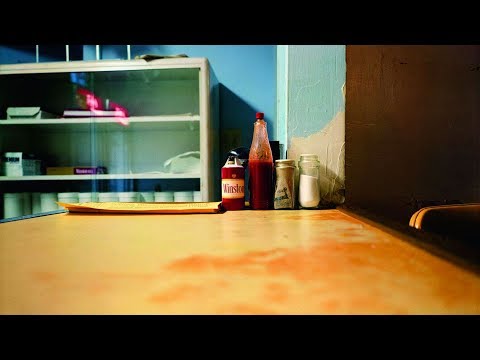
what is up everybody welcome back it is Monday which as you know means photo
assignments now Thanksgiving is happening this week in the US and so I
thought we would do something that's rather seasonally appropriate so for
photo assignment number 14 we are going to do food photography now this is going
to be more of a challenge than a specific technique or exercise that
we're going to go through and remember the whole point of photo assignments is
to challenge yourself creatively in how you think and how you approach what it
is that you want to say with a photograph I know it seems like it might
be easy since most people will be probably around a lot of food at some
point this week but really push yourself to go beyond that and I want to show you
some examples today of some things that you might think about that I think have
been done pretty well in the historical context of photography because
essentially food photography is going to be very closely related to still lifes
which is something that we have done before and there's a lot of techniques
that go into that and I want to look at some photographers I think one of the
most famous examples that most of you guys are probably already familiar with
is Edward Weston who did a very well-known series using food as still
life the peppers are probably the ones people are most familiar with there are
other foods as well but what I think is interesting about Weston's approach to
this and I think this is very significant as he approached these with
a very organic sensibility and so sometimes there's a metaphor for other
organic shapes you might associate these with maybe it's something like the human
figure maybe it's a fist clinching whatever that is it has this kind of I
guess almost personification into an object that it's representing I guess
it's the best way to put it there's a lot of really neat qualities to these
first of all they're done in black and white so you have removed a layer of
reality from that and they're essentially these organic studies of
light and they're absolutely beautiful some of my favorite work that he did
another contemporary of his was Wynn Bullock this is an image he did called
Half Of An Apple from 1953 I want to say and it's half an apple this image
probably wouldn't work the same way if it were in color and I think it's very
important that is a study in black and white because when you start to look at
this you start to see these forms in these shapes in here that are very
organic and they suggest things like maybe the human ear or they might look
like an owl whatever that is it starts to have this metaphoric personified
quality to it where it leads your mind into other places and I think that's
when this is done very successfully a contemporary photographer who I
mentioned a lot on this shows Tom Baril
and I think he has that in a very subtle way in his own work the images he does
of pears he does a lot of botanical work and I think that's probably what he's
most known for but there are other examples where I think that organic
quality and what that might suggest just to the viewer I think is what makes these
very interesting I think this is something that you see a lot
particularly an art of this time I mean Georgia O'Keeffe was doing these
paintings of flowers that had almost these erotic qualities to it but I think
that's interesting because I think that's what we are drawn to when we
start to see these things as we start to look at the shapes and then what that
relates to and it becomes very psychological in a certain sense so I
think these are really interesting examples to look at another photographer
whose work I absolutely love is André Kertész and it's really interesting to
see what he did with some of these organic shapes - and Kertész was an
amazing photographer and one of the most interesting series that I think he did
was a series of images that he did with the sx-70 when he was working with
Polaroid and they're very simple images but because the photographers really
removed from the development process obviously with instant film and then the
simplicity of having a fixed lens on a camera that's going to do color only and
really the way it came down for him was just an approach to composition not all
of these are foods but it's really interesting to see the studies that he
did with these I think that's somebody that you could draw a lot of inspiration
from another very well-known photographer Josef Sudek and he had a
very different approach so far all the examples we looked at
really fill up the whole frame of the image and they're almost I wouldn't go
as far as to say macro but they're very close-up in nature and the way Josef
Sudek approached these is almost more of a past master style where there are
other elements in the composition and maybe the apples or the fruit or
whatever that is become a part of that and you know there's also other elements
that add interest into this to like you know moisture in the window what's
happening with the light in the room and it's just a very different approach it's
very subtle but these images do involve food another photographer who did some
really interesting things shooting food was Irving Penn and I think the world of
Irving Penn I've talked about him a lot over the last couple years on this show
and I think what's interesting about Penn is when you consider he was working
in New York City you have Harper's Bazaar and Vogue which are the competing
magazines at the time and it was an environment where they were both having
an image overhaul and really trying to bring a
modernist style into the work that they were producing and so I think it was a
perfect storm if you will for Penn creatively to be able to insert some
really adventurous things into what was going on in essentially publication
photography at that time now what's interesting about Penn and I've always
thought this is that he's kind of of two minds there's a very conservative side
to Penn that's not going to do anything wild or over-the-top or bizarre or
strange but at the same time there's another side of pen that is highly
experimental and I think that his work is a culmination of all that coming
together and I think that's where you start to see some really interesting
things whether that's portraits or whether that's you know whatever that
work was and working for a magazine there's a lot of interesting food
pictures that he did they're all in color and these were typically run in
magazines against some kind of recipe or an article about cooking or something
like that and some of my favorites are the still lifes he did of frozen foods
first of all the subject is strange like who would shoot frozen packaged food at
that time but what I think the takeaway here and this is what I want you guys to
get out of this is I think you're going to be most successful with anything in
photography when you finally find a way to do something new and different that
pushes you creatively into that direction that you haven't done before
something that's not trend based something that's not style based and
Irving Penn is a really interesting example of where we see that and it's
not easy to do I get that it's really difficult and one last photographer
speaking of frozen foods that I want to mention who did some really bizarre work
is of course William Eggleston this is an image of a freezer interior but it is
a food image and he is William Eggleston so hope that gives you a little bit of
inspiration and maybe a reference point on where to start with some ideas on
here like I say on every photo assignment - push yourself to do
different things if you if a shot that you know you can execute on for instance
go ahead and get a good shot out of that but then push yourself to do something
you haven't done before or maybe you're not so sure you can succeed on because
that's one of the keys to not just photo assignments but anything in life really
creatively is that giving ourselves permission to fail is okay and because
you're not going to have success without failure first of all and the other thing
is if you don't make mistakes then you have nothing you can learn from and so
those are things that are really key allowing your work to move forward and
you know seeing your work on these photos assignments - those are some of my
favorite videos to make because it allows us to connect through photography
so the work is really improving and I love that and I love that it's moving in
that direction I'm gonna let you guys know I'm going to be doing some food
photography along with you guys in these photos assignments so you got to follow
me on Instagram if you want to see that I'll put my username below and so we'll
be working on that now another thing I want to mention is the deadline on this
so Thanksgiving is this week I'm going to be traveling at the end of the week
I'm going up through Chicago and then into the great state of Indiana and so
the likelihood of me actually getting the follow-up video done by next Monday
is pretty slim so what I'm gonna do is allow you two weeks on this and I think
the film people will be relieved on this but I'll give you a full two weeks to
work on this so that would put your deadline at December 2, 2017 so anyway
December 2nd will be the deadline that gives me that's a Saturday that will
give me Sunday to put it together and I'll release it on Monday on the 4th so
anyway if you are new to the show you have no idea what photo assignments are
I have a whole playlist of photo assignments that you can go check out we do them
every Monday and basically I give you an assignment it allows us to all
participate and then I feature the best work and the follow-up video and if you
want to know how you can submit your work I have a video for that too so go
check those out and I will be doing a couple more videos before the holiday
starts so stay tuned this week subscribe all that stuff so you'll be up to date
I'll see you guys in the next video until then later
-------------------------------------------
Hidden Amsterdam Oud West | Eileen Aldis - Duration: 5:08.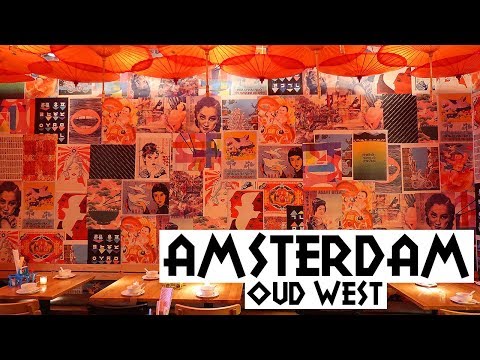
Hi guys!
Today's video is all about Amsterdam, the most popular city to visit in The Netherlands
and, arguably, in the entire world.
This is a place people love to go and visit and the Canal Ring is gorgeous, of course,
with the canals and the bridges but we wanted to get a little bit off the beaten track
so this is a neighbourhood profile of a place called Oud West or Old West.
I fell in love with a plant store there called Wildernis.
It opened in 2015 and I love the concept.
The goal for them is to make the city greener so they work with green professionals
and organizations to do that.
So they give workshops and lectures on nature and urban gardening.
Even if you're just visiting Amsterdam and you're not necessarily in the market to buy a plant,
because that doesn't travel very well,
it's still a great place to visit because you walk in and there's just so much beautiful greenery around you
that I just breathed a little bit easier.
So it's a nice kind of respite from walking around the streets
and you can also just sit there and get a coffee or a slice of homemade cake
and enjoy the feeling of being in an indoor garden.
Across the street from Wildernis you'll find a restaurant called HappyHappyJoyJoy.
It's the newest restaurant of a Dutch Chef named Julius Jaspers.
He's a cookbook author and a TV host
and the idea here is that everything from the food to the decor is designed to make you smile.
You really, really do feel happy and joy when you go inside.
It is seriously Instagrammable.
I didn't get a chance to eat here but I heard a ton of great reviews
and I'd love to go back another time.
Not far from the restaurant is De Hallen
and if you only have time for one stop in this neighbourhood this is definitely where you need to go.
It's a multi-use space that used to be a tram depot
and it's a fantastic example of repurposing an old space and making something new out of it.
It was built in phases between 1902 and 1928
and it's the only old tram depot in The Netherlands that's kept in its original state.
It's had a lot of purposes throughout the years.
In 1996 it was a public transportation museum and in 2005 it was occupied by squatters
and we're lucky that people in the neighbourhood got together and made sure that this building was saved.
Now it's home to an arthouse cinema, lots of creative independent shops,
and a weekly indoor craft market.
This historic converted building has become one of Amsterdam's most popular spots
and although there are a ton of places that you can look around and explore,
of course I did have some favourites.
One of which was actually a sock store called Qnoop.
Qnoop with a Q is a play on the Dutch word for 'button.'
The idea is that their socks come with a button, which is biodegradable by the way,
to save us from losing over 15 socks a year.
We all lose them in the wash or when they get separated in your drawer
and, if you have a button so that they're always together, you won't lose them.
If you get hungry while visiting De Hallen do not worry because there are tons of places
where you can get delicious food in the food hall.
You can get a full meal or a snack or just have a drink.
There are over 20 street vendors
that serve everything from pizza to Vietnamese food to Greek.
I'm sure you can find something that you like.
We ate at a place called Bao Wowow and, as I'm sure you can guess, had a bao.
I was a little shocked when the girl got out a blow torch but it did taste good.
If you walk all the way through the food hall at the back there's a restaurant called Kanarie Klub
and for me, the coolest thing is to see all of the little details that they preserved
from when it was a tram depot.
So if you look down at the floor you'll see the tracks,
above the bar there are more details,
and they've really kept the overall sense of history in this building.
Do not miss going upstairs because there's a pool
and this is inspired by when the building was occupied by squatters
who had a pool that was filled with rainwater.
One of the best stores in De Hallen is definitely The Maker Store and, as the name implies,
here you'll find original brands and amazingly unique products by local creators.
If you want to buy a souvenir from Amsterdam I can't think of a better place to go.
They had tons of unique things that you just can't find anywhere else.
There's also a street market that takes place outside De Hallen
so if you walk outside the building you can see that as well.
A few blocks away from De Hallen is Vondelpark.
This is the largest park in Amsterdam with 120 acres.
If you're craving some space or you just want to do some great people watching
you'll find people biking or walking their dogs
and it's a great place to just sit and have a rest.
I hope you enjoyed seeing this young, creative neighbourhood in Amsterdam.
If you did then give this video a thumbs up and leave a comment down below.
Tell me your favourite part of Oud West and, if you haven't already,
please subscribe to my channel for more travel videos and I'll see you in my next one.
Bye!
No comments:
Post a Comment